

 By
By Surgical techniques have evolved considerably over the years, offering patients a wider range of treatment approaches for many general and colorectal conditions. Alongside traditional open surgery, minimally invasive techniques such as laparoscopic and Robotic Surgery are now commonly used in selected procedures across the UK.
For patients preparing for surgery, understanding the differences between these approaches can help make treatment decisions feel clearer and more informed. Consulting an experienced Robotic Surgeon in Oxfordshire can also provide guidance on which surgical method may be most appropriate based on the individual condition and overall health.
Understanding Traditional Open Surgery
Traditional open surgery involves making a larger incision to allow the surgeon direct access to the treatment area. This approach has been used safely for many years and may still be recommended in certain situations, particularly for complex conditions or emergencies.
Open surgery may sometimes be considered when:
- Extensive access is required
- Previous surgeries have caused scar tissue
- A condition is particularly advanced or complicated
- Minimally invasive techniques are not suitable
While open surgery remains an important part of modern surgical care, minimally invasive approaches are increasingly used where appropriate.
What Is Robotic Surgery?
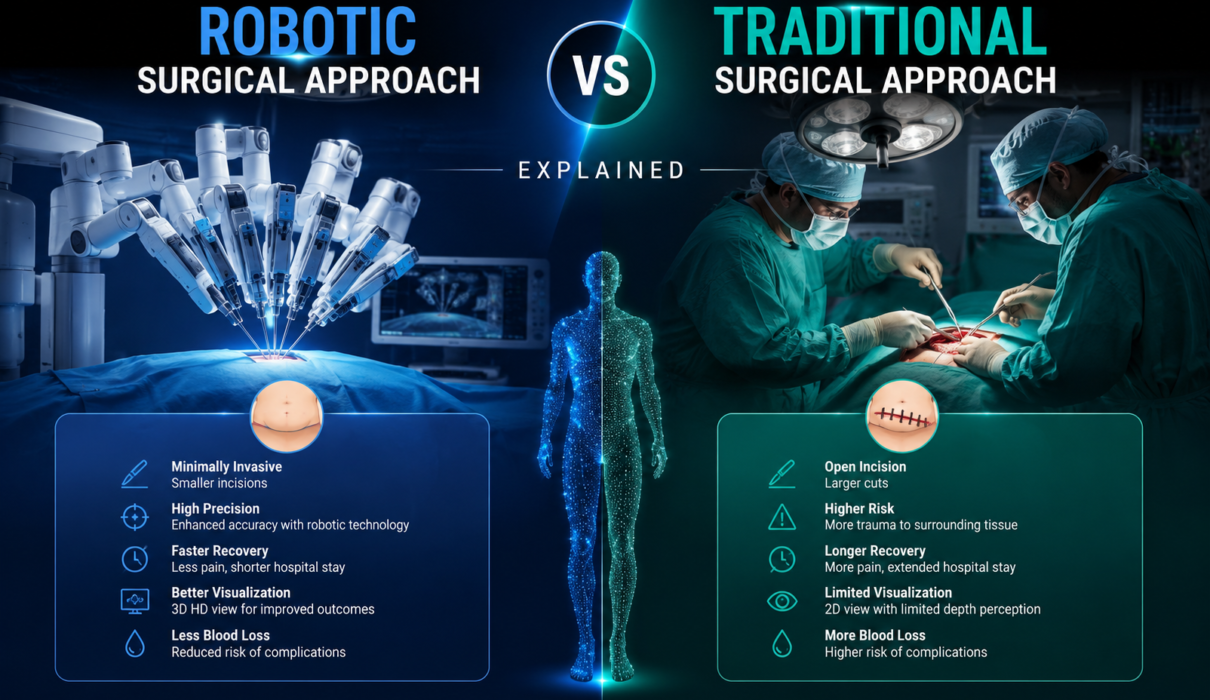
Robotic Surgery is a form of minimally invasive surgery where the surgeon uses specialised robotic technology to assist during the procedure. The robotic system does not act independently; every movement is controlled by the surgeon throughout the operation.
Robotic-assisted procedures are typically performed through small incisions using:
- Miniature surgical instruments
- High-definition 3D imaging
- Enhanced precision and movement control
This technology is used in a range of procedures, including colorectal surgery, hernia repair, and other abdominal operations.
How Do the Approaches Differ?
The main difference between robotic and traditional surgery lies in how the surgeon accesses and performs the procedure.
Incision Size
Traditional open surgery generally requires a larger incision, while robotic-assisted surgery is usually performed through smaller incisions.
Visualisation
Robotic systems provide magnified 3D views of the surgical area, helping surgeons visualise delicate structures clearly.
Instrument Movement
Robotic instruments are designed to allow precise movement and flexibility within confined areas of the body.
Surgical Planning
Both traditional and robotic techniques involve careful surgical planning, and the choice of approach depends on the individual patient and procedure.
Conditions That May Be Treated Robotically
A Robotic Surgeon in Oxfordshire may use robotic-assisted techniques for selected procedures involving:
- Bowel and colorectal conditions
- Hernia repair
- Diverticular disease
- Rectal surgery
- Certain abdominal procedures
Not all patients or conditions are suitable for robotic-assisted surgery, and treatment recommendations are always made individually.
What Patients Can Expect
Before surgery, patients usually attend a consultation to discuss:
- Their diagnosis
- Treatment options
- The recommended surgical approach
- Possible risks and benefits
- Recovery expectations
Pre-operative assessments and investigations may also be arranged before the procedure takes place.
On the day of surgery, robotic-assisted procedures are typically carried out under general anaesthetic. The surgeon remains in full control throughout the operation while using the robotic system to assist with precision and visualisation.
Recovery Following Surgery
Recovery experiences vary depending on the type of surgery performed and individual patient factors. Patients are usually given tailored guidance regarding:
- Wound care
- Activity levels
- Returning to work
- Follow-up appointments
- Diet and recovery support
Many patients undergoing minimally invasive procedures are encouraged to mobilise early and gradually resume normal activities where appropriate.
Choosing the Most Suitable Surgical Approach
Both traditional and Robotic Surgery continue to play important roles in modern healthcare. The most suitable approach depends on the condition being treated, the patient’s medical history, and the complexity of the procedure.
Speaking with a qualified Robotic Surgeon in Oxfordshire can help patients better understand available treatment options and make informed decisions about their surgical care.